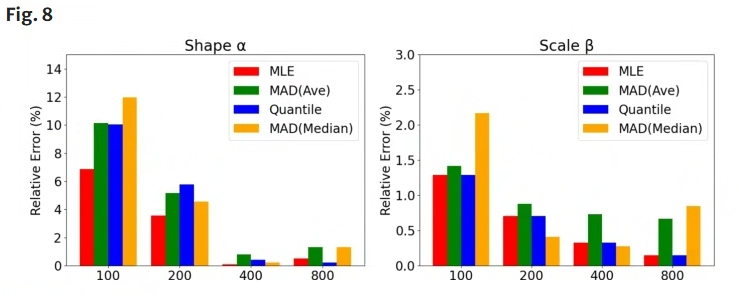
Novel parameter estimation method using mean absolute deviations around quartiles for truncated distributions without moments or variance, providing closed-form solutions comparable to MLE for Lévy, Cauchy, and Pareto distributions.
@article{pinsky2026estimation,title={Estimation of Distribution Parameters by Mean Absolute Deviations of a Truncated Distribution Using Quantile Functions},author={Pinsky, Eugene and Wen, Qifu},journal={Statistical Papers},publisher={Springer},year={2026},month=feb,volume={67},number={31},note={Co-first authors},}
One Ocean, All Tasks: A Holistic Simulation Environment for Marine Robotics
Shuaijun Liu, Qifu Wen, Xiang Chen, and 2 more authors
In IEEE/RSJ International Conference on Intelligent Robots and Systems (IROS), 2026
OceanEnv is a modular framework unifying large-scale ocean data with simulation tools for 3-DOF and 6-DOF marine robotics training.
@inproceedings{liu2026ocean,title={One Ocean, All Tasks: A Holistic Simulation Environment for Marine Robotics},author={Liu, Shuaijun and Wen, Qifu and Chen, Xiang and Hu, Xinyu and Su, Ningxin},booktitle={IEEE/RSJ International Conference on Intelligent Robots and Systems (IROS)},year={2026},note={Under review},}
2025
From Clicks to Conversations: Evaluating the Effectiveness of Conversational Agents in Statistical Analysis
Qifu Wen, Prishita Kochhar, Sherif Zeyada, and 2 more authors
International Journal of Human-Computer Interaction, 2025
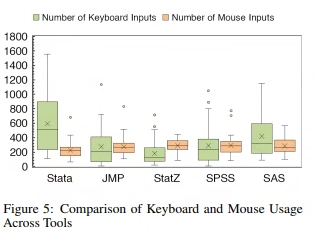
We compared conversational agents to traditional GUIs for statistical analysis through a user study with 51 participants. Conversational agents significantly outperformed GUI-based software on accuracy, completion time, and user satisfaction.
@article{wen2025clicks,title={From Clicks to Conversations: Evaluating the Effectiveness of Conversational Agents in Statistical Analysis},author={Wen, Qifu and Kochhar, Prishita and Zeyada, Sherif and Javaheri, Tahereh and Rawassizadeh, Reza},journal={International Journal of Human-Computer Interaction},publisher={Taylor \& Francis},year={2025},doi={10.1080/10447318.2025.2561760},}
GradES: Significantly Faster Training in Transformers with Gradient-Based Early Stopping
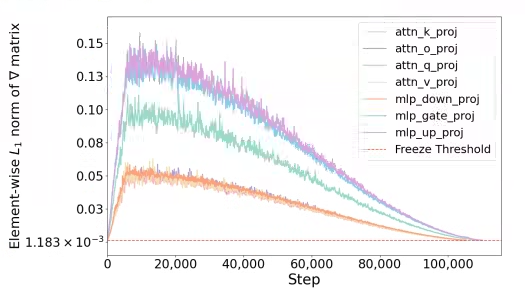
GradES is a gradient-based early stopping algorithm that individually freezes transformer components when their gradients fall below a convergence threshold. Achieves 1.2–1.57× faster LoRA fine-tuning on Llama-3.1-8B and Qwen3-14B.
@article{wen2025grades,title={GradES: Significantly Faster Training in Transformers with Gradient-Based Early Stopping},author={Wen, Qifu and Zeng, Xi and Zhou, Zihan and Liu, Shuaijun and Hosseinzadeh, Mehdi and Su, Ningxin and Rawassizadeh, Reza},year={2025},note={Preprint; targeting ICLR 2026},}
Pruning and Quantization Impact on Graph Neural Networks
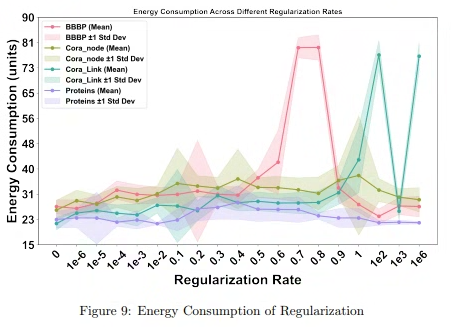
Empirical evaluation of pruning and quantization compression techniques on graph neural networks across multiple tasks and datasets.
@article{khedri2025pruning,title={Pruning and Quantization Impact on Graph Neural Networks},author={Khedri, Khatoon and Rawassizadeh, Reza and Wen, Qifu and Hosseinzadeh, Mehdi},journal={Journal of Machine Learning Research},year={2025},note={Under review},}